Why You Should Not Feed Monkeys in Thailand
Feeding monkeys changes their behaviour and can increase conflict, injury and disease. Learn how to observe them safely without encouraging dependency.
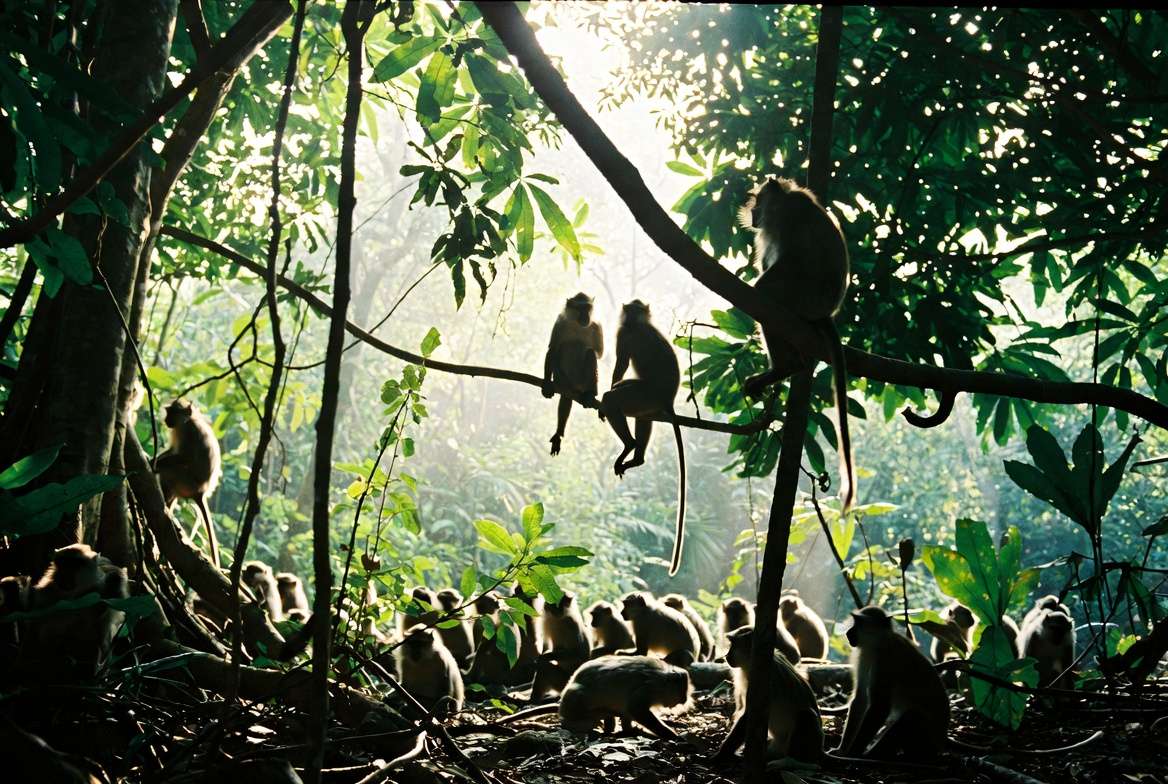
Monkeys appear around temples, viewpoints, beaches and forest edges across Thailand. Feeding them can feel harmless, especially when vendors sell fruit or nuts nearby. In reality, regular feeding changes animal behaviour, increases conflict and can expose both people and monkeys to injury and disease. The responsible choice is to observe without offering food.
Long-tailed macaques are highly adaptable. When they learn that people carry food, they may approach bags, grab bottles, enter vehicles or threaten anyone who resists. This is not because the animals have become “bad.” It is a predictable response to a food source that is easy, concentrated and repeatedly provided by humans.
Feeding changes the natural balance
Wild monkeys normally spend time searching for varied foods. Handouts can replace that behaviour with waiting near roads, car parks and tourist paths. Groups may become larger around feeding points, increasing aggression within the troop and pressure on nearby vegetation. Human food can also be nutritionally unsuitable, particularly sugary drinks, salty snacks and processed products.
Once a troop depends on visitors, a sudden drop in tourism can create hunger and wider roaming. Animals may enter homes, shops or farms. Local authorities then face a conflict partly created by well-meaning visitors. A photograph of a monkey accepting a banana does not show the longer chain of consequences.
Why close contact is risky
Macaques are strong, fast and capable of biting or scratching. Food can trigger competition, and a monkey may interpret a hidden snack as something to take. Keep food out of sight, close bags securely and do not tease an animal by showing food and pulling it away.
Any bite or scratch should be washed immediately and assessed by a medical professional. Rabies is preventable after exposure when treatment is given promptly, but it is almost always fatal once symptoms begin. The World Health Organization advises immediate wound washing and urgent medical evaluation after a possible rabies exposure. Do not rely on a guide, vendor or online comment to decide that treatment is unnecessary.
Common mistakes at monkey sites
Holding food for a photograph: This encourages grabbing and keeps animals close to people.
Carrying an open plastic bag: Monkeys may associate the sound and shape with food.
Touching babies: Adults may react defensively, and close contact stresses the infant.
Smiling with teeth: Direct staring and exposed teeth can be interpreted differently by primates.
Leaving food waste: Scraps continue attracting animals after visitors leave.
Using flash: Sudden light at close range can startle wildlife.
What to do if a monkey approaches
Stay calm and avoid sudden movements. Do not pull an object back and forth if an animal has already grabbed it; this can escalate the situation. Follow instructions from rangers or local staff. Do not hit, kick or corner the monkey unless you are protecting yourself from immediate harm.
Keep children close and avoid carrying them beside a feeding area. Remove loose food before arriving. Sunglasses, phones and water bottles can also attract attention, so secure them. If a site has become heavily dominated by food-seeking monkeys, the most responsible response may be to leave rather than participate in the crowd.
Vendors and the mixed message problem
Visitors are understandably confused when a sign says “do not feed” while someone nearby sells food for monkeys. Local economies and long-established practices can make change difficult. Buying food because it is available still adds to the demand. Politely decline and spend money on another local product or service.
Do not confront vendors aggressively or photograph them as evidence without consent. Behaviour change is more effective when authorities, communities and businesses agree on rules. Your role is to avoid reinforcing the harmful activity.
Temple monkeys are still wild animals
Living around a temple does not make a monkey domesticated or sacred in a way that removes welfare concerns. Temples can provide refuge, but unmanaged feeding may produce the same crowding and conflict seen at tourist viewpoints. Follow the site’s official guidance and respect the cultural setting described in our Thai temple etiquette guide.
Better ways to watch monkeys
Choose a protected area where animals can be observed from a distance with a trained guide. Use binoculars and keep voices low. Allow the troop to move away. A responsible guide will not whistle, throw food or block a route to create a sighting.
Pay attention to natural behaviour: grooming, foraging, warning calls and movement through the canopy. These observations are more interesting than a staged feeding interaction and provide a better understanding of how the animals live.
When wildlife and people share space
Human-monkey conflict cannot be solved by individual tourists alone. Waste management, land-use change, urban growth and poorly controlled feeding all matter. The Department of National Parks, Wildlife and Plant Conservation and local authorities may introduce barriers, education or population-management measures depending on the site.
Visitors can support those efforts by keeping rubbish contained, never feeding wildlife and reporting aggressive incidents to staff rather than retaliating. Avoid businesses that advertise monkey handling or close-contact photographs.
The responsible rule is simple
Do not feed monkeys, even when the animal appears hungry or the interaction is described as a local tradition. The short moment of pleasure for a visitor can create long-term costs for animals and communities.
Watch from a respectful distance, secure your belongings and seek medical care after any bite or scratch. Responsible wildlife tourism is often less interactive than people expect. That distance is not a missed opportunity; it is the space wild animals need to remain wild.