Ethical Hill Tribe Tourism in Thailand
Approach northern Thailand’s ethnic communities with respect by considering consent, local ownership, photography, fair payment and cultural context.
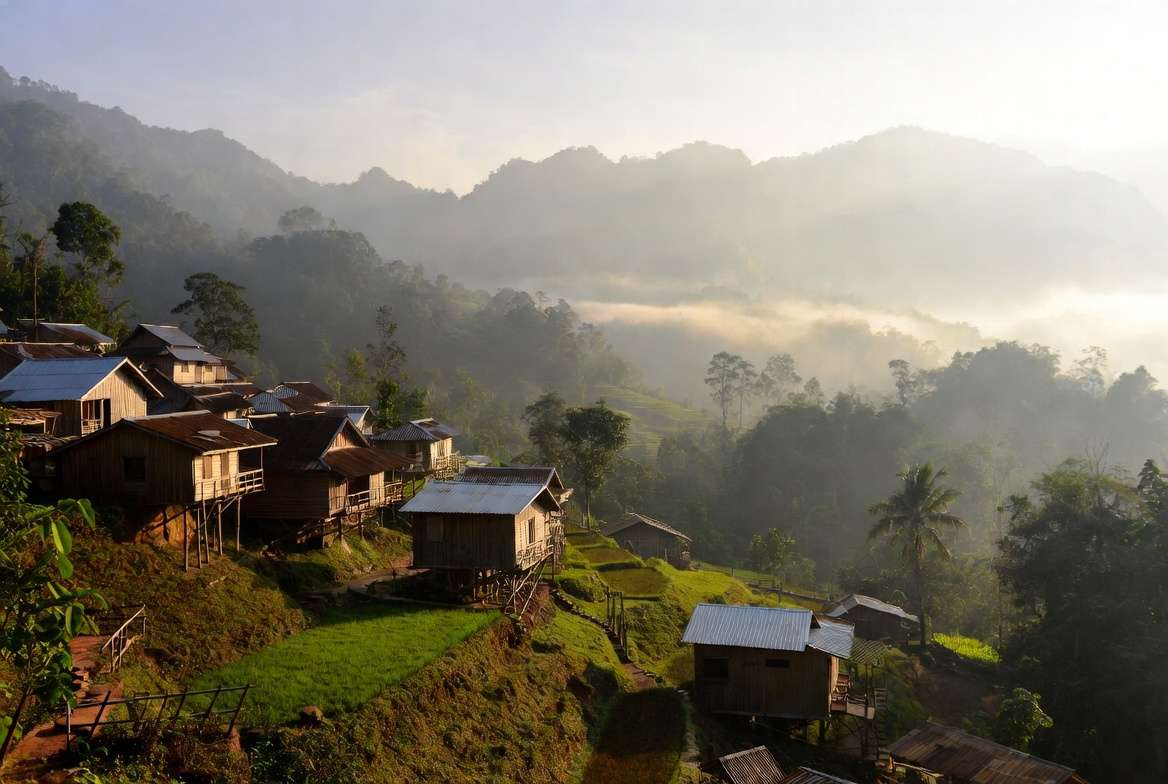
The phrase “hill tribe” is commonly used in Thailand’s tourism industry for several distinct ethnic communities in the north and west. It can hide major differences in language, history, citizenship, religion and livelihoods. Ethical tourism starts by recognising that these are contemporary communities, not attractions preserved for visitors.
Village tourism can provide income for guides, homestays, transport and crafts. It can also reduce people to costumes and photographs, especially when outside companies control schedules and payment. The goal is not to avoid every community visit. It is to choose experiences built on consent, local control and realistic cultural interpretation.
Ask who invited you
A responsible tour should explain how the visit was arranged and who in the community approved it. “Our guide knows the village” is not enough. Ask whether residents decide visitor times, group size, photography rules and which homes or workshops participate.
Unannounced visits can interrupt work, school, ceremonies and family life. A village road is not automatic permission to enter homes or photograph residents. If an operator says everyone is happy because tourism brings money, ask how that money is distributed.
Move beyond the costume photograph
Traditional clothing may be worn daily, ceremonially, commercially or in different combinations depending on the community. Do not assume a person dressed traditionally is available for a portrait. Ask permission and respect a refusal. Payment for a posed photograph can be appropriate when it is clearly offered as a service, but it should not replace a broader understanding of the person’s work and community.
A good guide explains history, migration, agriculture, language and current challenges. A weak tour repeats stereotypes about “primitive” or “untouched” lifestyles. Avoid operators that promise to show people who have not changed for centuries.
The complexity of long-neck tourism
Visits to Kayan communities are among the most debated forms of tourism in northern Thailand. Photographs often focus on brass neck coils while ignoring migration history, legal status and individual choice. Some residents earn important income from tourism and craft sales; others may have limited alternatives. A simple label of either exploitation or empowerment can miss those differences.
Before visiting, ask whether residents control the site, can move freely, set prices and participate in business decisions. Spend time learning rather than walking through a line of stalls for photographs. Do not ask invasive questions about bodies or remove the coils for demonstration.
Choose community-owned services
Look for local guides, homestays, food providers and cooperatives named clearly in the itinerary. Payment should not disappear into one outside company. Ask what portion of the fee remains in the village and whether households rotate hosting opportunities.
Buying crafts directly can support skilled work, but ask where materials and products come from. Mass-produced souvenirs may be sold alongside local textiles. Pay a fair price and avoid aggressive bargaining, particularly for work that took days to make.
Children require stronger boundaries
Do not give sweets, cash or school supplies directly to children. Gifts can encourage begging, create inequality and undermine community plans. Never ask children to pose, follow them into school or post identifiable images without informed adult consent.
A tour should not market access to children as a benefit. School visits require formal arrangements and a clear educational purpose. If the main activity is tourists watching or photographing a class, the value is primarily for visitors rather than students.
Homestays should feel like hosting, not access without limits
Staying in a family home can create meaningful exchange when expectations are clear. Ask what areas are private, whether meals are shared, how water should be used and what clothing is appropriate. Hosts should receive direct payment and have the right to decline dates.
Do not expect constant entertainment. Families have work and responsibilities. Learn basic greetings, help only when invited and accept simpler facilities without treating them as evidence of greater authenticity.
Questions for tour operators
Which community organisation approved this visit?
How many groups visit per week?
Who receives the tour fee and how is it divided?
What are the photography rules?
Are residents paid for demonstrations, meals and guiding separately?
How does the community handle complaints or stop participation?
Combine cultural respect with trail responsibility
Many village visits are included in treks. Choose small groups and follow the safety and environmental guidance in our responsible northern Thailand trekking guide. Wet paths, farm land and water sources require careful movement. Do not wander away from the route to photograph homes.
Temple visits within communities also require normal religious etiquette. Our Thai temple etiquette guide explains dress, body position and photography.
Use better language
When the specific community name is known, use it rather than treating all groups as interchangeable. Avoid words such as primitive, exotic and untouched. Communities change, use technology, participate in politics and make different choices about tourism.
The Tourism Authority of Thailand provides information on community-based destinations, but operator-level questions remain necessary. Awards and promotional labels do not remove the need to understand consent and payment.
What a good visit should leave behind
A responsible visit leaves income, respect and control with hosts. It does not leave children expecting gifts, residents exhausted by photographs or paths damaged by oversized groups. You should leave with more knowledge than images.
Choose fewer communities and spend longer in one place. Listen to how people describe themselves. Pay fairly, ask before entering or photographing, and accept that some parts of community life are not available to visitors. Ethical cultural tourism depends on those limits.